10 Signs Your Hotel Has Outgrown Manual Bookings


When the systems that got you here are the same ones holding you back
Every hotel starts somewhere. For most independent properties, that starting point involves a reservations email inbox, a paper calendar or basic spreadsheet, a phone line for direct enquiries, and a handful of OTA extranets managed by whoever has time. This approach works at low volume. It is tactile, controllable, and requires no technology investment beyond what the property already has.
The problem is not that manual hotel bookings are a bad starting point. The problem is that they have a ceiling, and most properties hit that ceiling well before they recognize it. The signs tend to accumulate gradually: a double-booking that seemed like a one-off, a confirmation email sent hours after it should have gone, a busy weekend where the front desk was so consumed with administrative processing that actual guests felt the difference. Each incident is explainable in isolation. Together, they form a pattern that points to a single underlying cause: the hotel booking process has outgrown the infrastructure managing it.
This article identifies the ten signs that indicate a hotel has crossed that threshold, and explains what each sign costs in operational terms, in revenue, and in guest experience. If several of these signs are present simultaneously, the case for transitioning to a hotel booking system is not a technology decision. It is a business continuity decision. Platforms like HotelRunner are built precisely for this transition, giving independent hotels the booking engine, channel manager, and automation tools they need to move beyond manual processes without the complexity or cost that enterprise software typically demands.
A single double-booking can be attributed to human error. A pattern of double-bookings is a systems failure.
Double-bookings in a manual hotel booking management environment occur because availability exists in multiple places simultaneously, and those places are not synchronized in real time. The OTA extranet shows a room as available. The front desk calendar shows it as blocked. A phone reservation was taken but not yet entered into the system. A group booking reduced inventory that the OTA doesn’t yet know about. Any one of these disconnects creates the conditions for a double-booking.
The cost of a double-booking extends well beyond the inconvenience of the moment. A guest who arrives to find their room unavailable experiences one of the most damaging failures a hotel can produce. The compensation cost — typically covering alternative accommodation, transportation, and a goodwill gesture — is immediate and tangible. The reputational cost, particularly if the displaced guest posts a review, compounds over time.
| Double-Booking Cause | Manual Booking Environment | Online Hotel Booking System |
| OTA and front desk out of sync | Common, lag between update and reflection | Eliminated by real-time inventory sync |
| Phone reservation not entered immediately | High risk during busy periods | Automated entry on booking receipt |
| Group booking reducing availability late | Manual channel closure required | Automatic allocation reduction across channels |
| Staff error during peak periods | Inevitable at sufficient volume | System-enforced availability controls |
| Multiple OTAs not updated simultaneously | Structurally impossible manually | Single update pushes to all channels |
If your property has experienced more than one double-booking in the past six months, inventory synchronization has broken down. A hotel reservation system with real-time channel connectivity is the structural fix. Everything else is damage control.
Double-bookings are the most visible category of reservation error, but they are far from the only one. Manual hotel reservation management produces a predictable range of errors that each carry their own operational and guest experience cost.
Wrong room type assigned. Incorrect rate entered. Special request not noted. Booking confirmation sent to the wrong email address. Arrival date recorded incorrectly. Group reservation split incorrectly across room types. Each of these errors requires staff time to identify and correct, often under the pressure of a guest who is already at the front desk expecting the room they booked.
The frequency of reservation errors in a manual hotel booking process scales directly with booking volume. At low volume, careful staff can catch most errors before they reach the guest. As volume increases, the error rate increases proportionally because the system has no validation layer. A hotel booking system introduces automated data validation, mandatory field completion, and direct OTA-to-PMS data transfer that eliminates the transcription errors that occur whenever a human copies information from one place to another.
This is one of the most telling signs your hotel has outgrown manual bookings, and one of the hardest to quantify because the cost is embedded in how the workday feels rather than in a specific line item.
Track a typical front desk shift and categorize what the time actually goes to. If a significant proportion of that time is spent entering reservations, updating OTA extranets, sending booking confirmations manually, cross-referencing the phone reservation log against the online calendar, and chasing missing guest information, the hotel booking process is consuming the operational capacity that should be directed toward guests who are physically present.
This is not a staffing problem. Hiring more people to manage a manual hotel booking management process scales the cost without fixing the underlying inefficiency. Hotel booking automation removes the administrative processing from the workload entirely, freeing front desk capacity for the guest interactions that actually drive satisfaction scores and repeat bookings.
| Front Desk Task | Time Per Booking (Manual) | Time Per Booking (Automated) |
| Entering OTA reservation into system | 5 to 10 minutes | Zero, automatic delivery |
| Sending booking confirmation | 3 to 5 minutes | Zero, automatic trigger |
| Updating availability across channels | 10 to 20 minutes per rate change | Zero, single-action push |
| Cross-referencing reservation sources | 15 to 30 minutes daily | Zero, unified dashboard |
| Handling double-booking resolution | 30 to 60 minutes per incident | Near zero, prevented structurally |
| Responding to availability enquiries | 5 to 10 minutes per enquiry | Zero, real-time availability online |
The cumulative time reclaimed by moving from manual hotel bookings to a hotel booking system is substantial. For a small front desk team, it routinely amounts to several hours per day that can be redirected toward guest experience.
Ask your front desk manager right now: how many rooms do you have available for next Friday? If the answer requires them to check the OTA extranets, cross-reference the phone reservation log, consult the group bookings calendar, and do mental arithmetic before arriving at a number, your hotel does not have real-time availability visibility. It has several partial views of availability that require manual reconciliation to produce a complete picture.
This matters beyond the operational inconvenience of the calculation. Without a single, accurate, real-time view of room availability across all booking sources, every availability-dependent decision carries uncertainty. Rate decisions are made on incomplete data. Overbooking buffers are set conservatively to compensate for the uncertainty, which costs occupancy. Guest enquiries about specific room types or dates cannot be answered confidently without checking multiple sources.
An online hotel booking system with a unified availability dashboard gives everyone who needs it, from the front desk to the revenue manager to the general manager, a single authoritative view of current and future availability that updates in real time as bookings arrive, cancellations are processed, and inventory is adjusted.
The booking confirmation is the first operational communication a hotel sends a guest after they commit to a stay. Its timing and quality set the tone for everything that follows. A confirmation that arrives within seconds of booking, is well-formatted, contains all relevant details, and reflects the hotel’s brand creates confidence. A confirmation that arrives hours later, was clearly written from a template by someone pressed for time, or omits key details creates doubt.
In a manual hotel booking process, confirmation quality is a function of staff workload at the moment the booking arrives. During quiet periods, a well-crafted confirmation might go out within the hour. During a busy check-in period, a reservation received at 3pm might not be confirmed until the following morning. By that point, the guest has been waiting for hours and their confidence in the booking has diminished.
Hotel booking automation eliminates this variability entirely. Every reservation, regardless of when it arrives or how busy the front desk is, triggers an immediate, professionally formatted booking confirmation with all relevant details. The guest experience of the booking process becomes consistent across every booking, every channel, and every time of day.
If the majority of your bookings arrive through OTAs rather than through your own website, and that proportion has been stable or increasing over time, the imbalance deserves examination. OTA commission rates typically range from 15 to 25 percent of the booking value. On a property generating significant annual revenue, that commission represents a substantial transfer of margin to distribution intermediaries.
The primary reason independent hotels fail to increase direct bookings is not that guests prefer OTAs. Research consistently shows that guests who are aware of a direct booking option and can access it easily will use it, particularly when it offers a comparable or better rate and a seamless booking experience. The barrier is the booking experience itself. A hotel website with no integrated booking engine, or one with a basic and unintuitive reservation form, converts at a fraction of the rate of an OTA listing page that has been optimized for conversion over years and billions in investment.
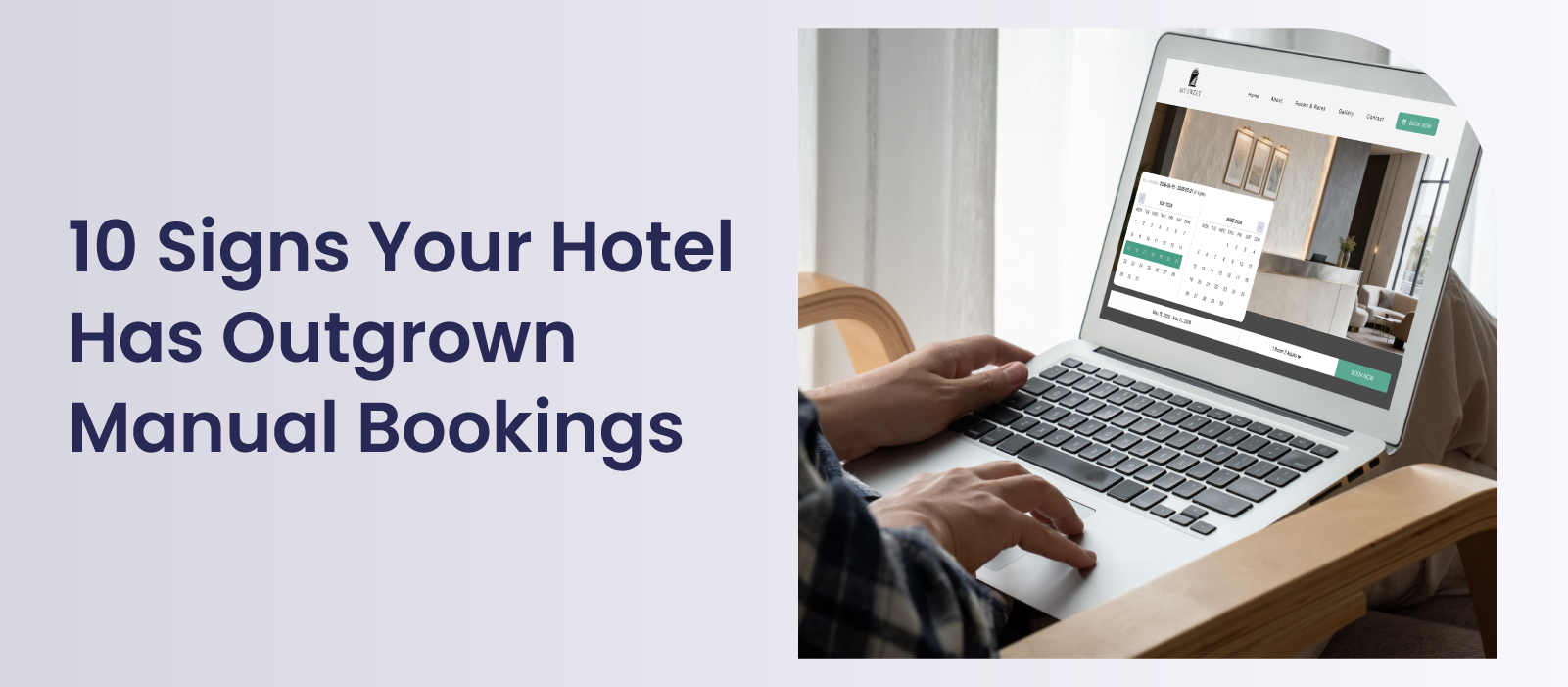
A hotel booking engine integrated into your website provides the direct booking infrastructure that allows guests to complete a reservation without leaving your website, in a fast, mobile-optimized flow that captures payment securely and confirms instantly. This is the technical prerequisite for any strategy to increase direct hotel bookings.
| Booking Source | Average Commission Cost | Guest Relationship Ownership | Data Access | Upsell Opportunity |
| OTA (Booking.com, Expedia) | 15 to 25 percent | Limited by platform | Restricted | Minimal |
| OTA (Airbnb) | 3 percent host fee | Platform-mediated | Restricted | Limited |
| Direct (website booking engine) | Near zero | Full ownership | Complete | Full control |
| Direct (phone or email) | Near zero | Full ownership | Complete | Conversational |
| Metasearch (Google Hotel Ads) | CPC or small commission | Full ownership post-click | Complete | Full control |
Every percentage point shift from OTA to direct booking improves margin without requiring any increase in occupancy or average rate. For most independent hotels, improving the direct booking capability is the highest-return revenue management action available.
How long does it take your team to implement a pricing decision across all your active channels? If the answer is measured in hours rather than minutes, the manual hotel booking management burden around rate management is costing you both time and revenue.
The revenue cost is less obvious than the time cost but is arguably more significant. Rate management done manually on a periodic basis means your pricing is always slightly behind the market. Demand shifts that should trigger a rate adjustment at 9am on a Tuesday get actioned at the end of the week when someone has time. By then, the demand window has partially closed. The inventory that could have been sold at a higher yield has either been sold at the previous rate or not sold at all.
Hotel revenue management conducted through an automated hotel booking system operates on a different temporal logic. Rate changes push to all connected channels simultaneously, in real time, from a single action. Rule-based automation can implement yield adjustments automatically when occupancy crosses a defined threshold. The revenue manager’s time shifts from executing rate changes manually to setting the strategy that the system executes.
If you cannot answer the following questions quickly and confidently from data rather than intuition, your hotel booking process is not generating the management information your business needs to make good decisions.
Which channel produces your highest-value bookings by average rate? What is your cancellation rate by OTA, and how does it vary by booking window? What is your average booking lead time by room type? Which rate plans are driving the most revenue? What proportion of guests who start a booking on your website complete it, and where do the others drop off?
These are not advanced analytics questions. They are basic hotel reservation management questions that any property managing a significant volume of bookings should be able to answer. In a manual booking environment, answering them requires pulling data from multiple sources, reconciling it manually, and doing calculations in a spreadsheet. In a hotel management software environment, they are dashboard metrics available in real time.
| Performance Metric | Manual Booking Process | Hotel Booking Software |
| Revenue by channel | Manual extraction from each OTA extranet | Consolidated in real time |
| Cancellation rate by source | Not practically available | Automatic calculation per channel |
| Average booking window | Manual calculation from reservation log | Available by channel and room type |
| Website booking conversion rate | Requires analytics setup and manual correlation | Integrated booking engine analytics |
| Occupancy rate by room type | Manual from reservation calendar | Live dashboard metric |
| Rate performance vs market | Manual benchmarking research | Automated competitive rate monitoring |
| Pickup pace vs forecast | Not available without significant manual effort | Forward-looking demand dashboard |
The absence of this data is not just an analytical inconvenience. It means that hotel revenue management decisions are being made without the information required to make them well. Every pricing decision, every channel strategy choice, every promotional investment is operating on partial information.
The guest relationship in a well-managed hotel extends well beyond the stay itself. It begins at the booking confirmation and continues through pre-arrival communication, in-stay touchpoints, and post-stay follow-up. Each of these moments is an opportunity to strengthen the relationship, surface relevant ancillary revenue, and build the kind of loyalty that produces repeat bookings and referrals.
In a manual hotel booking environment, all of this communication requires human initiation. A staff member has to remember to send the pre-arrival email. Someone has to compile the list of upcoming arrivals and draft personalized messages. The post-stay review request has to be generated and sent to each departed guest individually. Under operational pressure, these tasks are the first to be deferred and the last to be caught up on.
Hotel booking automation changes this by making guest communication a triggered sequence rather than a manual task. The booking confirmation fires automatically at the moment of reservation. The pre-arrival email sends automatically at a defined interval before check-in. The post-stay review request sends automatically after checkout. Each of these touchpoints can be personalized based on booking data: room type, length of stay, channel of origin, special requests noted at booking.
The guest experience of consistent, timely, personalized communication before and after the stay is one of the clearest differentiators between properties that feel professionally managed and those that feel operationally stretched. Hotel booking automation is how independent properties deliver that experience without the staffing levels that would otherwise make it impossible.
This is the final and most significant sign, because it is the one that speaks to the future trajectory of the business rather than the current operational state.
Consider what would happen to your current hotel booking process if your occupancy increased by 30 percent next month. Would the reservation management workflow scale proportionally, with each additional booking handled as smoothly as the current volume? Or would the manual processes that are already stretched begin to break down: more errors, slower confirmations, more double-bookings, more staff overtime, more time pressure on the front desk?
If the honest answer is the latter, the current hotel booking process is not just inefficient. It is a growth ceiling. The business cannot scale its revenue without proportionally scaling its administrative headcount, because the operational model requires human intervention at every step of the booking management workflow.
Hotel management software breaks this constraint by making the booking management process scalable by design. The system processes 100 reservations with the same operational effort as 10. Rate updates push to all channels whether the property has 20 bookings that week or 200. Guest communications send automatically whether the front desk team is managing a quiet Tuesday or a full-house Saturday. The administrative capacity of the operation scales with the software, not with headcount.
This is the central business case for hotel digital transformation at the property level: not just operational efficiency in the present, but the removal of the operational ceiling that limits growth in the future.
For hotel owners and managers who want a consolidated view of what the transition from manual hotel bookings to an automated hotel booking system actually changes, the following comparison captures the most material differences across operational dimensions.
| Operational Dimension | Manual Hotel Bookings | Automated Hotel Booking System |
| Availability management | Multiple sources, manually reconciled | Single real-time source of truth |
| Rate updates | Channel by channel, time-consuming | Single action, all channels simultaneously |
| Booking confirmations | Manual, variable timing and quality | Automatic, instant, consistently formatted |
| Double-booking risk | Structurally present | Structurally eliminated |
| OTA management | Individual extranets, separate logins | Unified dashboard, single login |
| Direct booking capability | Email or phone only | 24/7 online booking engine on website |
| Guest communication | Manual, inconsistent | Automated, trigger-based, personalized |
| Performance reporting | Manual aggregation from multiple sources | Real-time consolidated dashboard |
| Revenue management | Periodic manual rate review | Real-time data, rule-based automation |
| Scalability | Constrained by staff capacity | Scales with system, not headcount |
| Front desk administrative load | High, increases with volume | Low, consistent regardless of volume |
| Channel distribution | Fragmented, parity difficult to maintain | Centralized, parity enforced automatically |
For hotel owners and managers who recognize several of the signs above and are actively evaluating hotel booking software options, the following criteria provide a structured basis for comparison.
PMS integration depth. The connection between your booking software and property management system determines whether the efficiency gains of automation actually reach your operations. Ask whether the integration is bidirectional, real-time, and handles the full reservation lifecycle including modifications and cancellations.
Channel manager connectivity. Assess the platform’s certification tier with your primary OTAs. A preferred connectivity partner relationship with Booking.com or Expedia is materially different from a standard API connection in terms of sync speed, feature access, and support priority.
Booking engine quality. If increasing direct hotel bookings is a priority, evaluate the booking engine on mobile performance, checkout simplicity, payment options, and brand alignment. A booking engine that requires guests to leave your website or navigate more than four steps to complete a reservation will underperform.
Automation capability. Determine what the platform automates out of the box versus what requires configuration. Guest communication sequences, rate rules, and inventory management automation should be available without custom development.
Reporting and analytics. Assess whether the platform provides the booking performance data your revenue management process requires, in real time, in a format that is usable without data export or manual processing.
Support model. For independent hotels with small teams, the quality of support when something goes wrong is as important as the quality of the software when it is working correctly. Ask about support hours, response time commitments, and the availability of onboarding assistance.
If the criteria above describe what you are looking for, HotelRunner brings all of it together in one platform: PMS integration, channel manager connectivity, a direct booking engine, and the automation tools independent hotels actually need to run leaner without compromising the guest experience. You can explore how it fits your hotel or request a demo now.
When should a hotel switch from manual bookings to a hotel booking system?
The practical answer is: before the current manual process begins generating errors at a frequency that damages guest experience. Most properties reach this point earlier than they realize. If double-bookings have occurred more than once, if confirmation delays are regular, or if administrative processing is consuming front desk time that should go to guests, the threshold has already been crossed. HotelRunner is designed specifically for this transition moment, offering independent hotels a fast onboarding process that gets a property fully operational on an automated booking system without a lengthy implementation project.
What are the main problems with manual hotel reservations?
The structural problems with manual hotel reservations are inventory fragmentation across booking sources, the absence of real-time availability synchronization, the human error rate inherent in manual data entry and transcription, the inability to implement rate changes across all channels simultaneously, and the scalability ceiling that prevents revenue growth without proportional headcount growth. HotelRunner addresses all of these through its integrated channel manager, real-time PMS connectivity, and centralized inventory dashboard.
How do you reduce hotel booking errors?
Booking errors are reduced most effectively by removing human data entry from the reservation workflow. An automated hotel reservation system receives booking data directly from the source, validates it automatically, and delivers it to the property management system without manual transcription. HotelRunner’s direct OTA integrations, including certified preferred connectivity with Booking.com, Expedia, and Airbnb, ensure that reservation data arrives in the system complete and accurate, eliminating the transcription errors that occur when staff copy information between platforms.
What is the difference between a hotel booking engine and a hotel reservation system?
A hotel booking engine is the guest-facing tool that enables direct online reservations through a hotel’s own website. A hotel reservation system is the broader operational infrastructure that manages reservations across all booking sources, including OTAs, phone bookings, group reservations, and direct bookings, within a centralized management environment. HotelRunner provides both within a single platform: a conversion-optimized booking engine for the hotel’s own website and a full reservation management system that consolidates all incoming bookings regardless of source.
How do hotels increase direct bookings?
Increasing direct hotel bookings requires two things to be true simultaneously: the booking experience on the hotel’s own website must be fast, simple, and mobile-optimized, and guests must have a reason to prefer the direct channel over an OTA. The first requirement is met by a quality hotel booking engine. The second is addressed through rate parity management, direct booking incentives, and consistent guest communication that builds loyalty to the property rather than to the OTA platform. HotelRunner’s booking engine, combined with its automated guest communication tools and metasearch integration via Google Hotel Ads, gives independent hotels the complete infrastructure to shift booking mix toward direct without requiring a dedicated revenue management team to manage it.
The ten signs above are not individually catastrophic. Most hotels experiencing them are still functioning, still generating revenue, and still delivering reasonable guest experiences. The question is not whether the current manual hotel bookings approach is working. The question is whether it is working as well as it could, and whether the gap between current performance and what a properly automated hotel booking process would deliver is a gap worth closing.
For most independent properties, the answer to that question is one of the clearest business decisions available.