7 Ways Reservation Systems Stop Hotel Overbookings


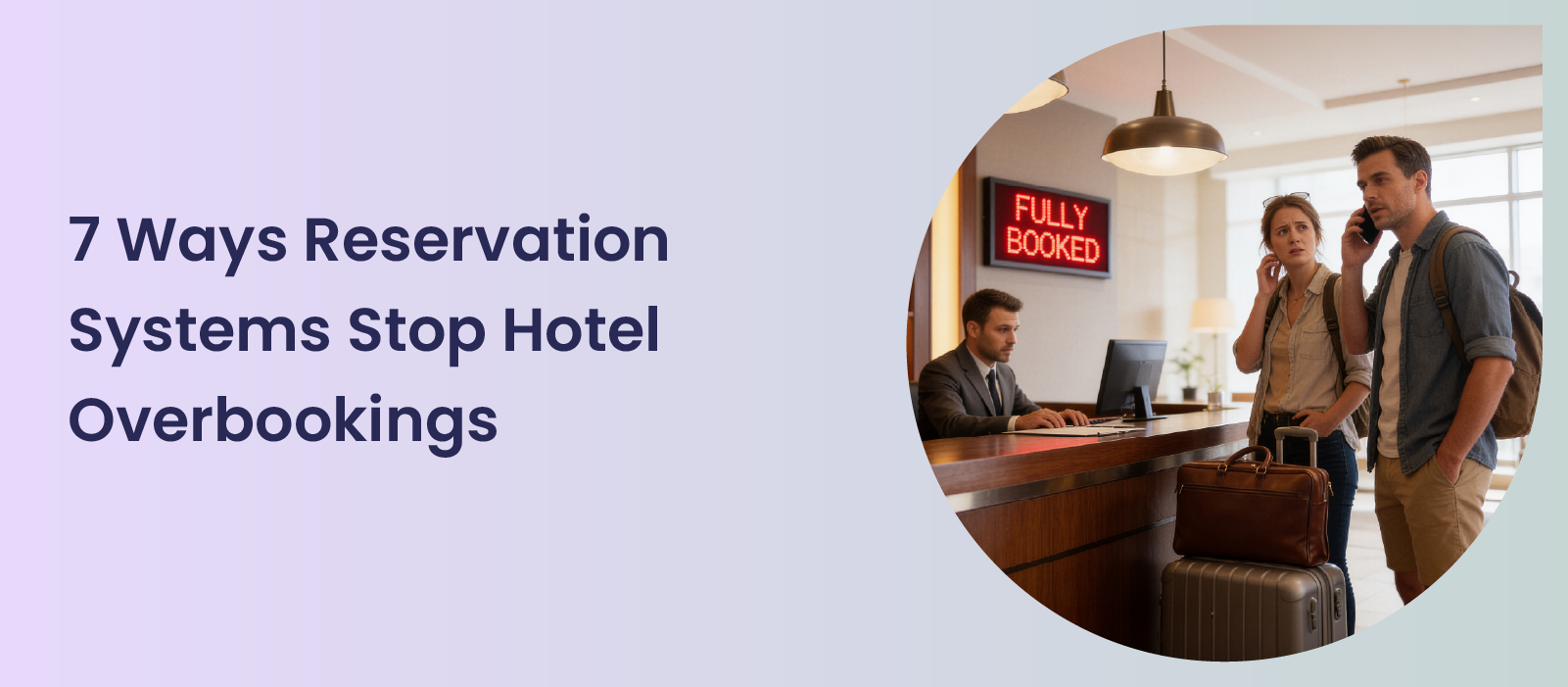
Few things damage a hotel’s reputation faster than telling a guest who has a confirmed booking that their room isn’t actually available. An overbooking situation might seem like a minor scheduling hiccup, but the fallout is rarely minor. Between compensation payouts, last-minute relocations to other properties, and the public reviews that almost always follow, a single overbooking can end up costing far more than an empty room ever would.
That’s the uncomfortable truth many hoteliers learn the hard way: an unsold room is a missed opportunity, but an oversold room is an active liability. It damages guest trust, disrupts front desk operations, and can ripple into lost future bookings from guests who simply decide not to come back.
HotelRunner’s Central Reservation System brings all of the protections above together into a single, connected platform built specifically to eliminate the gaps that cause overbookings.
In this blog, we’ll break down what hotel overbooking really means, why it happens, and the seven ways a modern reservation system protects your property from it.
A hotel overbooking occurs when a property accepts more reservations than it has rooms available for a given date. It can happen across an entire property or just within a specific room category, and it’s more common than many travelers realize.
Not all overbookings are mistakes. Some hotels intentionally oversell a small percentage of their rooms as a deliberate revenue strategy, betting that a predictable number of guests will cancel or simply not show up. Airlines have used this approach for decades, and many hotels apply the same logic during periods with historically high no-show rates.
The problem isn’t the strategy itself; it’s when the math doesn’t work out. If fewer cancellations happen than expected, or if the overselling buffer is set too aggressively, the hotel ends up with more confirmed guests than rooms on the night they actually need them.
Accidental overbooking is a different story entirely. This happens when a hotel doesn’t intend to oversell at all, but inventory data across booking channels falls out of sync. A room gets booked on one OTA while the same room is simultaneously sold through the hotel’s website or another channel, because none of the systems updated each other in time.
The costs of overbooking extend well beyond the obvious.
Revenue loss: Walking a guest to another property, covering the cost of their replacement room, and often covering transportation or meals, adds up quickly, sometimes exceeding the revenue the original booking would have generated.
Operational disruptions: Front desk staff have to scramble to find alternative accommodations, often during check-in rushes when the team is already stretched thin.
Guest satisfaction and brand reputation: A displaced guest rarely keeps the experience to themselves. Negative reviews about being “bumped” from a confirmed reservation are some of the most damaging a hotel can receive, because they signal unreliability to every future guest who reads them.
Increased staff workload: Beyond the immediate fire-fighting, staff spend time investigating what went wrong, communicating with affected guests, and trying to prevent the same issue from recurring, time that could have gone toward guest experience optimization instead.
These costs touch nearly every part of the business, from revenue management decisions to long-term hotel distribution strategy.
Understanding the root causes of overbooking is the first step toward preventing it. In most cases, it comes down to a handful of recurring issues.
Manual inventory updates
Many hotels, particularly smaller independent properties, still update room availability by hand across each channel they sell on. This often means logging into multiple extranets separately, or worse, relying on spreadsheets to track what’s been sold where. Every manual step introduces a delay, and every delay creates a window where the same room can be booked twice.
Delayed channel synchronization
Even hotels using a channel manager can experience a time lag between when a booking comes in on an OTA and when that update reaches the direct booking channel and other connected platforms. If that lag stretches even a few minutes during a high-demand period, it’s enough for the same room to be sold more than once.
Multiple distribution channels
The modern hotel sells inventory in more places than ever, including major OTAs, the hotel’s own direct website, metasearch platforms, wholesalers, and traditional travel agents. Each additional channel adds value by expanding reach, but it also adds another point where availability data needs to stay perfectly in sync. The more channels in play, the higher the risk if any single connection breaks down.
Human error
Even with good systems in place, people make mistakes. Duplicate reservations get entered, room types get assigned incorrectly, and inventory updates occasionally just get forgotten during a busy shift. On their own, these errors might seem small, but they compound quickly across a property handling dozens or hundreds of bookings a day.
System integration issues
Perhaps the most underestimated cause of overbooking is a disconnect between a hotel’s property management system, booking engine, and channel manager. When these three pieces of hotel inventory management technology don’t talk to each other seamlessly, availability data can become inconsistent without anyone noticing until a guest shows up to a room that’s already occupied.
A modern reservation system addresses this complexity by acting as the operational backbone of a hotel’s booking process. At its core, it does four things consistently and automatically:
It centralizes every reservation, regardless of where it originated, into a single system of record. It automates availability updates the moment a booking, cancellation, or modification occurs. It synchronizes that updated availability across every connected channel without requiring manual intervention. And it provides real-time visibility into occupancy and inventory status, so staff always know exactly where things stand.
With that foundation in place, let’s look at the seven specific ways this technology actively prevents overbookings.
This kind of real-time hotel inventory synchronization becomes especially important as a hotel expands across more sales channels. Whether a booking comes through a major OTA, the hotel’s direct website, a metasearch platform, or a B2B distribution partner, the same real-time logic applies. No channel is left working from outdated information, which means no channel can accidentally sell a room that’s already gone.
The result is a meaningful reduction in availability discrepancies between channels, more accurate booking data across the board, and a significant drop in the operational risk that comes from staff not knowing the true, current occupancy picture.
Instead of checking separate extranets, spreadsheets, and a front desk logbook to understand what’s been booked, centralized hotel reservation management brings every reservation type, including website bookings, OTA reservations, walk-ins, and group bookings, into one unified dashboard.
This single view gives staff better visibility into exactly what’s booked and when, without needing to cross-reference multiple sources. It supports faster decision-making, particularly during busy check-in periods or when handling last-minute requests. And because there’s only one place where reservation data lives, the chance of human error from juggling multiple disconnected records drops significantly.
Every booking, cancellation, and modification automatically adjusts room availability in the system, without anyone needing to manually update a count or cross out a row on a spreadsheet. If a guest cancels a three-night stay, that inventory becomes available again instantly, ready to be sold through any channel.
This kind of hotel room availability management removes the property’s dependency on someone remembering to make a manual update, which is one of the most common points of failure in overbooking scenarios. More importantly, it keeps inventory accurate at all times, not just at the end of a shift when someone has time to reconcile the numbers.
A hotel channel manager acts as the connective layer between a property’s inventory and every channel it sells on. It handles automatic distribution of rate and availability updates, pushes real-time updates the moment something changes, and maintains inventory consistency across every connected platform.
With a properly integrated channel manager, hotels can confidently expand their hotel distribution management strategy to new channels without worrying that doing so will increase the risk of overselling. The system prevents overselling by design, which means growth in distribution doesn’t come at the cost of operational stability.
Reservation systems allow hotels to set automated hotel booking rules that govern how and when rooms can be booked. This includes stop-sell rules that immediately halt sales for specific dates or room types, minimum stay requirements that prevent short, fragmented bookings during high-demand periods, maximum stay rules that protect against long-term bookings tying up inventory unexpectedly, and closed-to-arrival restrictions that prevent new check-ins on dates where the property is already at capacity.
These rules become especially valuable during holidays, special events, and peak seasons, when demand can spike suddenly and unpredictably. Rather than relying on staff to manually adjust restrictions across every channel in response to a surge in bookings, the system applies these rules automatically and consistently, everywhere at once.
Even with strong automation in place, hotels benefit from a system that actively watches for inventory discrepancies and flags them instantly, rather than waiting for someone to notice a problem during a routine check.
Modern reservation systems can send automated alerts for things like unusual booking activity that doesn’t match typical patterns, sudden demand spikes that could strain available inventory, and channel synchronization issues that might indicate a connection problem before it causes a double booking.
This kind of hotel occupancy management gives staff the chance to investigate and resolve issues early, often before a guest is ever affected. The result is faster issue resolution and noticeably better day-to-day operational control over inventory.
Beyond day-to-day operations, reservation systems give hotels access to historical booking patterns, pace reports showing how bookings are trending compared to previous periods, and broader occupancy trends across the calendar year.
This data supports much smarter hotel forecasting and inventory management. Hotels can adjust allocations across room types based on real demand patterns, control availability more precisely heading into known high-demand periods, and reduce overbooking risk during peak demand by planning ahead rather than reacting in the moment.
When a hotel can see demand coming, it can manage its inventory proactively instead of scrambling to fix problems after they’ve already affected guests.
How can hotels prevent overbookings? While the right technology does most of the heavy lifting, a few operational habits make a real difference alongside it.
Start by auditing your distribution channels regularly. Periodically reviewing every channel your hotel sells on helps confirm that availability, rates, and restrictions are showing correctly everywhere, and helps catch any connections that may have quietly broken without anyone noticing.
Automate inventory management wherever possible. The fewer manual steps involved in updating availability, the fewer opportunities there are for something to go wrong.
Integrate your hotel technology stack. A PMS, booking engine, and channel manager that all communicate with each other in real time form the foundation that everything else depends on.
Monitor reservations in real time. Having visibility into bookings as they happen, rather than reviewing them in batches at the end of the day, makes it far easier to catch and correct issues quickly.
Finally, train staff on reservation procedures. Even the best technology benefits from a team that understands how the system works, what to do if an alert comes through, and how to handle the rare edge cases that automation alone can’t fully resolve.
HotelRunner brings all of the protections above together into a single, connected platform built specifically to eliminate the gaps that cause overbookings.
At its core is real-time inventory synchronization, ensuring that the moment a room is booked through any channel, availability updates everywhere else instantly. This is paired with an integrated booking engine and channel manager, so there’s no disconnect between how a hotel sells directly and how it distributes across OTAs, metasearch, and other partners.
All reservations flow into centralized reservation management, giving hotel teams a single, reliable view of every booking regardless of where it originated. Combined with automated availability updates that adjust inventory the instant a booking, cancellation, or modification occurs, hotels gain complete distribution control from one platform.
The result for hotels using HotelRunner is straightforward: fewer booking errors, higher guest satisfaction, increased operational efficiency, and more confidence in every revenue management decision they make.
Overbooking doesn’t have to be an accepted cost of doing business. With a CRS like HotelRunner’s in place, connecting every channel, every reservation, and every availability update into one system, it becomes a problem that simply doesn’t happen. Try HotelRunner’s CRS today!