Why Do Independent Hotels Lose Direct Bookings Without a Website Booking Engine?


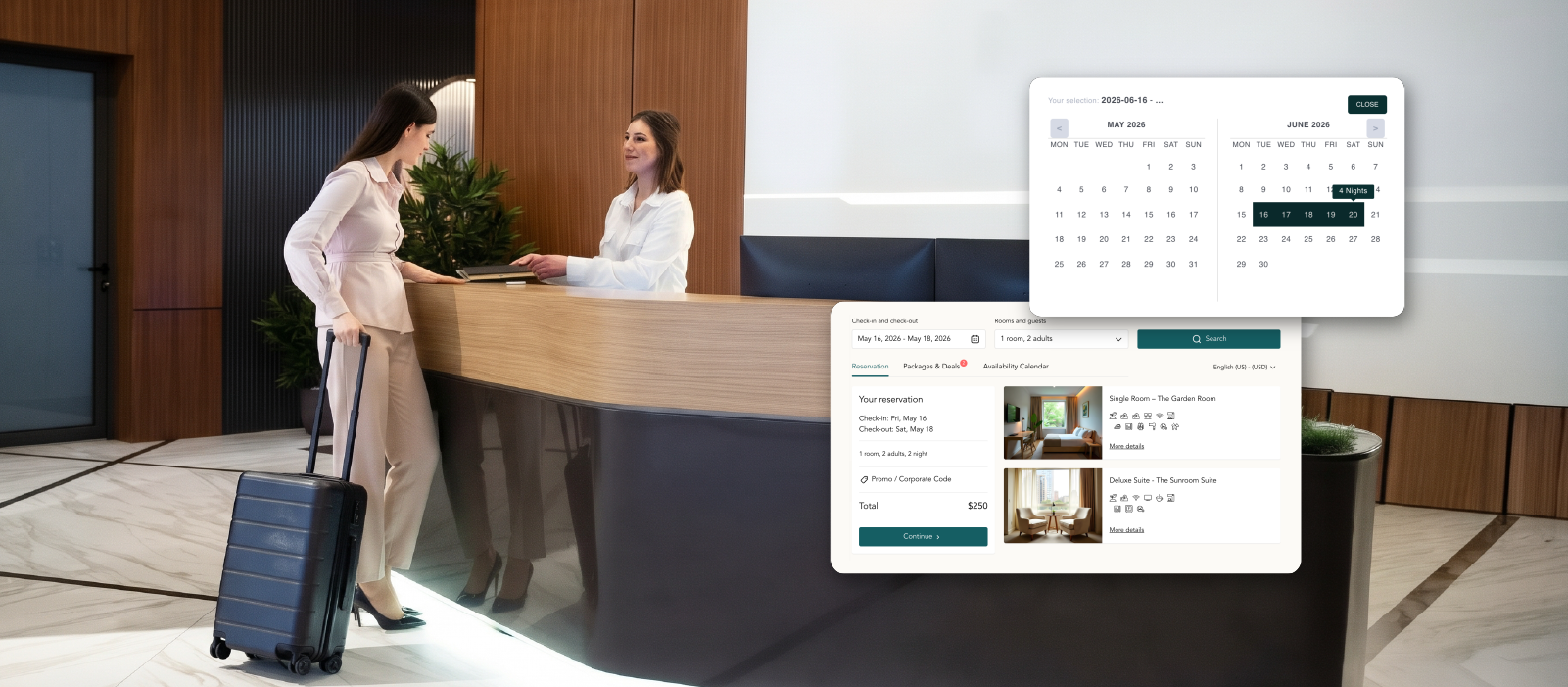
Many independent hotels have a good website but no way to take a booking on it. When guests cannot see a price or confirm a room, they leave and book through an OTA, and the hotel pays commission on demand it created itself.
This guide explains where those bookings are lost and what it takes to keep them. HotelRunner, which serves thousands of accommodation providers in 193 countries, offers its Booking Engine for exactly this gap: it turns the hotel website into a direct sales channel connected to the same inventory as every other channel.
Most direct bookings are not lost because guests prefer OTAs. They are lost because the hotel website is the one place in the journey where the guest cannot finish.
Guests often find a hotel on an OTA, then visit the hotel’s own site to learn more or look for a better deal, a pattern known as the billboard effect. If that site cannot show a price or confirm a room, the guest goes back to the OTA, where booking takes a minute. The main friction points are:
Every booking that starts on the hotel website but ends on an OTA carries a commission the hotel did not need to pay.
OTAs win because they make booking easy. They show real-time availability, a clear total price, secure payment, instant confirmation and a checkout built for mobile. OTAs remain valuable for reach; the problem starts when the hotel’s own website cannot offer the same basics.
Without a booking engine, a hotel cannot show its own bookable rate on metasearch engines such as Google Hotels, Tripadvisor and Trivago, so guests comparing prices there only see third-party offers. Hotels that connect a booking engine to these platforms through a connectivity partner can appear next to OTA prices with their direct rate, marked as the official site, through both free listings and paid ads.
Reservations taken by email or phone have to be entered by hand into every channel, and each delay risks selling the same room twice. Static price lists on a website also drift away from the rates on other channels. A booking engine running on the same inventory as the channel manager updates availability and rates everywhere at once.
A guest who books through an OTA often stays the OTA’s customer, and their next search starts there. A direct booking gives the hotel the full guest profile and the chance to ask for marketing consent. The hotel can then invite guests back, offer add-ons such as breakfast or transfers at booking and build repeat business with no commission.
Independent hotels lose direct bookings without a website booking engine because their website cannot finish what it starts. The answer is not leaving OTAs but making the website a channel that can sell on its own.
HotelRunner’s Booking Engine gives independent hotels that channel. It runs on the same platform as HotelRunner’s Channel Manager and Cloud PMS, so every booking made on the hotel website updates availability across connected channels automatically. As an official Google connectivity partner, HotelRunner also helps hotels show their direct rates on Google next to OTA offers.